Ignition System Inspection (service every 60000 km or 2 years)
GENERAL INFORMATION
Warning The voltage generated by the ignition system is much higher than the voltage from other vehicle systems. Use extreme caution when working with the ignition switched on. Persons with an implanted cardiac pacemaker must not work near ignition circuits and components or test equipment. Check the condition and serviceability of ignition system components as described in the relevant subsections.General Inspection
PROCEDURE
1. Inspect the spark plug high-tension leads whenever the spark plugs are replaced. If necessary, remove the distributor cap.

2. Before disconnecting the high-tension leads, make sure they are marked with numbers indicating the cylinder to which each lead belongs.
3. Disconnect the leads by holding the boots, not the lead, to avoid separating the conductor from the terminal.
4. Check the terminals for corrosion, which usually appears as white powder. Reconnect the boot and make sure it is firmly attached to the spark plug. If the connection is unreliable, remove the boot and carefully bend the adapter inside the boot so that it fits tightly on the spark plug terminal.
5. Wipe the entire lead dry. Do not bend or stretch the lead excessively.
6. Disconnect the other end of the lead from the distributor by pulling on the boot. Check the distributor-side terminal for corrosion and make sure the lead is securely attached, using the same procedure as for the spark plug side. Measure the lead resistance by connecting an ohmmeter between the spark plug-side terminal and the segment contact inside the distributor cap. After the check, reinstall the lead.
7. Check the remaining leads in the same order.
8. If the high-tension leads must be replaced, purchase a new set of leads that match the vehicle and engine.
9. Remove the distributor cap retaining screws. Remove the cap and seal. Clean the cap thoroughly and check the inside and outside of the cap for cracks, signs of surface arcing (thin burnt tracks), wear and burnt contacts.
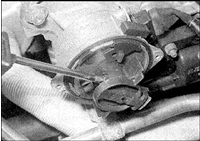
10. Check the carbon brush for wear and make sure it moves freely under spring pressure and makes good contact with the rotor. Also check the condition of the distributor cap seal and replace it if damaged. Remove the screw and take the rotor off the distributor shaft, then check the rotor condition.
11. When replacing the high-tension leads, it is recommended to replace the rotor and distributor cap. When replacing, disconnect the lead from the old cap and insert it into the new cap at the same position it was removed from the old cap. Do not remove two or more leads from the old cap at the same time, otherwise they may be installed incorrectly and the firing order will be wrong.
12. Press the rotor firmly onto the distributor shaft and tighten the screw. Install the gasket, then install the distributor cap and tighten the screws. Install the cover.
13. Even if the distributor is in good condition, some engines may still have difficult starting caused by moisture entering the ignition system components. In this case, an effective measure is to use a moisture-dispersing aerosol or apply a water-repellent sealing coating.
Checking and Setting Ignition Timing: For the ignition timing check procedure, refer to subsection 7.7.
7.
Test yourself
A quick Nissan Sunny quiz: every answer comes with an explanation and a link to the manual page.