Exhaust System Inspection
PROCEDURE
1. Perform the inspection on a cold engine (at least three hours after the engine has been stopped). Check the condition of all exhaust system components, starting from the engine to the muffler outlet section. The inspection is best performed from underneath the vehicle on a lift, which provides unrestricted access to all system components.
2. Check the pipes and connections for corrosion, mechanical damage, and exhaust gas leaks. Make sure the system components are securely fastened and that the brackets and hangers are in good condition.
3. While inspecting, also check the underbody for corrosion, holes, and separated seams through which exhaust gases could enter the passenger compartment. Seal all holes in the underbody with silicone sealant.
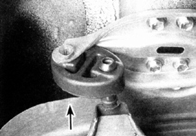
4. Knocking and other noises are often caused by exhaust system components, especially at their mounting points. Rock the pipes, mufflers, and catalytic converter. If these components contact suspension parts, replace the exhaust system mounting elements. Be sure to check the integrity of all exhaust system rubber mounts (indicated by arrow).
5. Check engine operation by inspecting the inside surface of the pipe exiting the muffler outlet section. The intensity of soot deposits can indicate the operation of various engine systems and the need for their adjustment. Presence of soot, carbon, or white deposits indicates the need for a thorough engine inspection, primarily of the fuel system.
Test yourself
A quick Toyota Corolla quiz: every answer comes with an explanation and a link to the manual page.