Electrical Component Failure Diagnosis - Electrical Connectors - General Information
Most electrical connectors in the vehicle circuits are made of plastic and have multiple terminals. The mating halves of these connectors are secured by locking tabs molded into the connector housings. Large connectors, such as some of those located under the instrument panel, are most often held together by through-bolts passed through the center of the connector housings.
To disconnect connectors with plastic locks, use a small screwdriver to carefully pry up the locking tabs. (Before disconnecting, carefully examine the mated connector. It is often difficult to determine how the halves are locked by sight alone. Some connectors have several locking devices.) Pull only on the connector housing, never on the wiring harness, to avoid accidentally damaging the terminals inside the connector.
Connectors always consist of two halves, with the terminals of one half fitting inside the terminals of the other. When studying connector schematic illustrations, first determine which half is shown in the illustration: the half connected to the harness or the half mounted on the component. Remember that the terminals of one connector half are always arranged as a mirror image of the terminals in the other half.
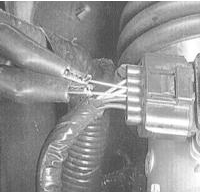
Often, when diagnosing circuit failures, it is necessary to check voltage at the terminals of a mated connector. For these checks, insert the meter probe into the appropriate terminal from the rear of the connector housing.
Use care and do not bend or deform the terminals. If the terminal openings are too small, use a straightened metal paper clip as a probe, and then connect the meter lead to it using an alligator clip.
Test yourself
A quick Honda Accord quiz: every answer comes with an explanation and a link to the manual page.