Adjusting/replacing brake pressure regulator
The brake pressure regulator controls the brake pressure for the rear wheels depending on vehicle load. This prevents the rear wheels from locking up and improves vehicle stability during braking. The regulator is mounted to the body at the rear and is controlled from the rear axle via a spring.
AdjustingSet the front wheels straight ahead. Park the vehicle (ready to drive) on a level surface with the wheels on the ground.
Load the luggage compartment with the following weights, depending on model, placed as close as possible directly above the rear axle:
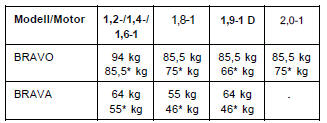
*) Weight for vehicles with full accessories.
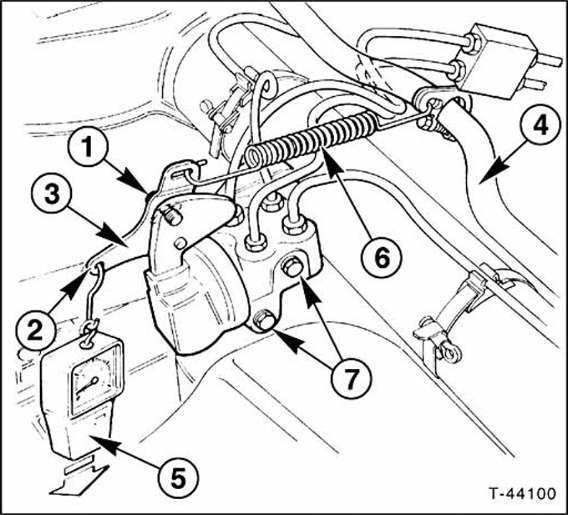
Loosen bracket mounting bolt - 1.
Hook a spring scale - 5 - onto eyelet - 2 - of bracket - 3. Pull the bracket downward with the spring scale using the following force.

Hold bracket - 3 - in this position and tighten bracket mounting bolt - 1 - to 20 N·m.
Raise the vehicle at the rear.
Lower the rear part of the exhaust system by unscrewing the rear and center mounts from the body.
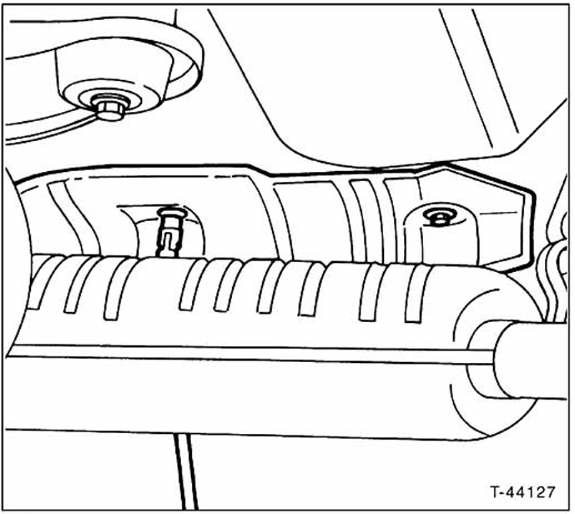
Unscrew the heat shield for the exhaust system to access the brake pressure regulator.
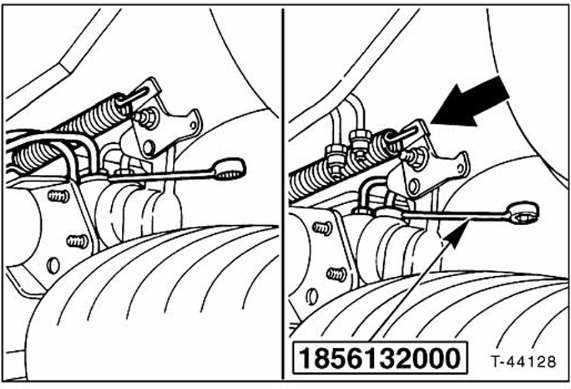
Unscrew the brake lines from the brake pressure regulator (SW11 and SW13) and plug them. -left illustration-
Unhook spring -arrow- from the brake pressure regulator using flat-nose pliers.

Unscrew brake pressure regulator.
Screw on the new brake pressure regulator to 10 N·m.
Tighten the brake lines with union nuts to approx. 5 N·m.
Hook the spring into the eyelet on the regulator.
Screw the rear exhaust system mount to the body.
Hook the handbrake cable into the bracket on the fuel tank.
Lower the vehicle.
Adjust the brake pressure regulator.
Bleed brake system.
Are the brake hose connections tightened?
Is the brake hose seated in the bracket?
Are the bleeder screws tightened?
Is there enough brake fluid in the reservoir?
With the engine running, carry out a leak check.
To do this, press the brake pedal with 200 to 300 N (equivalent to 20 to 30 kg) for about 10 seconds. The brake pedal must not sink. Check all connections for leaks.
Then carry out several braking tests on a road with light traffic.
Test yourself
A quick Fiat Bravo quiz: every answer comes with an explanation and a link to the manual page.