Driving Notes
Driving notes for the Ford Mustang (VI generation) cover important topics such as breaking in new components, driving in water or low temperatures, and economical driving. New tires and brakes require a short break-in period to deliver their full performance. Anticipatory driving, optimal gear selection, and reduced use of electrical systems can also help lower fuel consumption. Safety aspects when driving through water and the correct use of floor mats are also covered in detail for safe and efficient driving in all conditions.
Break-in period
Tires
WARNING
New tires require a break-in period of approximately 500 km. During this time, handling may differ from normal.
Brakes and Clutch
WARNING
Avoid excessive use of the brakes and clutch, if possible, during the first 150 km in city driving and the first 1500 km on highways.
Engine
WARNING
Avoid excessive speeds during the first 1500 km. Change speed frequently and shift up to the next higher gear early. Do not overload the engine by driving at low engine speeds.
Vehicles with a diesel engine
During the first 2000 miles (3000 kilometers), a clicking noise may be heard when decelerating the vehicle. This is normal, as the new diesel engine is adjusting itself.
Reduced engine power
WARNING
Continuing to drive increases the engine temperature and will cause the engine to shut off completely.
If the coolant temperature gauge needle moves into the upper limit range, the engine is overheating. See Gauges.
If the engine is overheated, the vehicle may only be driven a short distance. The possible driving distance depends on the outside temperature, the load and the terrain conditions. In this case, engine power is limited for a short time.
If the engine temperature continues to rise, the fuel supply to the engine is reduced. The air conditioning switches off and the engine cooling fan runs continuously.
- Reduce your speed gradually and stop the vehicle as soon as traffic or conditions allow.
- Switch off the engine immediately to avoid serious engine damage.
- Allow the engine to cool down.
- Check the coolant level.
Economical Driving
The following tips will help you save fuel.
Tire pressure
For optimal fuel consumption, check the tire pressure regularly. See Technical Data.
Gear selection
Use the highest gear possible for the driving conditions.
Drive anticipatively
Adjust the vehicle speed and the distance to other vehicles so that neither abrupt braking nor acceleration is necessary.
Efficient speed
At higher speeds, more fuel is consumed. Reduce your sustained speed on open roads.
Accessories
Do not install unnecessary accessories on the outside of the vehicle. If you use a roof rack, fold it down or remove it after use.
Electrical systems
Switch off all electrical systems, such as the air conditioning, after use. Do not forget to disconnect accessories from the auxiliary power outlets after use.
Precautions in low temperatures
Temperatures below -25°C may affect the function of certain components and systems.
Driving through water
WARNING
Do not drive through flowing or deep water, as the vehicle may lose control.
Note: Driving through standing water can cause vehicle damage.
Note: If water enters the air filter, engine damage may result.
Before driving through standing water, check the depth. Never drive through water that is higher than the bottom edge of the front door sill area.
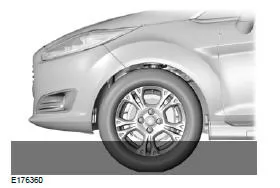
When driving through water, drive very slowly and do not stop the vehicle. Braking performance and traction may be limited. After driving through water, and as soon as this can be done without compromising safety:
- Lightly press the brake pedal to dry the brakes and check that they are working.
- Check that the horn works.
- Check that the exterior lighting works.
- Turn the steering wheel to check that the power steering is working.
Floor mats
WARNINGS
Use only floor mats designed for the footwell of your vehicle.
Use only floor mats that do not obstruct the pedal area. Only use floor mats that are firmly secured to the anchor points so that they cannot slip and get under the pedals or otherwise interfere with the safe operation of your vehicle.
Pedals that cannot be operated freely may cause loss of vehicle control and increase the risk of serious injury.
Always make sure the floor mats are properly secured to the anchor points in the vehicle floor carpet.
Floor mats must always be secured at both anchor points so that they cannot slip.
Never place floor mats or other coverings in the footwell that cannot be properly secured.
Unsecured mats and coverings can slip, obstruct pedal operation and cause loss of vehicle control.
Never place floor mats or other coverings on top of floor mats that are already installed. Floor mats should always be placed on the vehicle carpet and not on another floor mat or another covering.
Additional floor mats or other coverings reduce the pedal clearance to the floor and can affect pedal operation.
Check the floor mat attachment regularly. Always refit and secure floor mats correctly after they have been removed for cleaning or replacement.
Always make sure that no objects can fall into the driver's footwell while driving. Loose objects can get under the pedals and cause loss of vehicle control.
If the instructions for correctly fitting or
securing floor mats are not followed, pedal operation may be obstructed, which may result in loss of vehicle control.
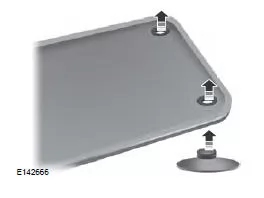
When fitting floor mats, align the eyelet so that it is above the anchor point, then press down to engage it.
To remove the floor mat, reverse the installation procedure.
The driving instructions for the Ford Mustang (VI Gen, 2014–2023) help the driver move the vehicle safely and efficiently. Whether break-in tips, advice on economical driving or behavior in special conditions, the 2014–2023 Ford Mustang shows its versatility and everyday usability here.
The recommendations on driving through water or on using the floor mats are particularly important to avoid damage to the vehicle or hazards. The Ford Mustang VI Generation combines sporty driving enjoyment with clear guidance for responsible driving.
Frequently Asked Questions
May the Ford Mustang (VI Gen, 2014–2023) be driven through deep water?
No, the water must not rise above the lower edge of the door sill, to avoid damage or loss of control.
Why must no additional floor mats be placed on top of the standard floor mats?
Because they can obstruct the pedals and impair safety.
Test yourself
A quick Ford Mustang quiz: every answer comes with an explanation and a link to the manual page.