Seats
Seat comfort and safety in the Ford Mustang (VI Gen, 2014–2023) are the focus of this chapter. It explains the correct seating position, manual and power adjustments, and the use of head restraints. It also covers operating the rear seats and the memory function for entering the rear seat. In addition, seat heating and cooling are described, with important safety information. This detailed guide ensures comfort, ergonomics and protection on every trip.
Correct Seating Position
WARNINGS
Never recline the seatback too far rearward, as the occupant could slide under the seat belt in a crash and suffer serious injury.
An incorrect seating posture or
An incorrect seating position or a seatback reclined too far rearward can result in serious injury or death in a crash. Always sit upright with your back against the seatback and your feet on the floor.
Do not place objects higher than the seatback to reduce the risk of serious injury in a collision or emergency braking.
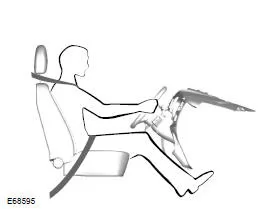
When used correctly, the seat, head restraint, seat belt and airbags provide optimal protection in a collision.
We therefore recommend following these guidelines:
- Sit upright with your hips against the seatback.
- Do not recline the seatback more than 30 degrees.
- Adjust the head restraint so that its upper edge is level with the top of the head, and move the head restraint as far forward as possible. Make sure you have a comfortable seating position.
- Maintain sufficient distance from the steering wheel. We recommend a minimum distance of 10 in (25 cm) between the breastbone and the airbag cover.
- Hold the steering wheel with your arms slightly bent.
- Bend your legs slightly so that you can fully depress the pedals.
- Place the shoulder portion of the seat belt across the middle of your shoulder and guide the lap portion firmly across your hips.
Make sure the driving position is comfortable and always ensures full control of the vehicle.
Head Restraints
WARNINGS
Raise the rear head restraint when the rear seat is occupied.
Never remove the head restraints when the front seats are in use.
Note: Adjust the head restraint so that the upper edge of the head restraint is level with the top of the head.
Front Seat Head Restraint
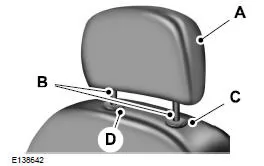
The head restraints consist of the following components:
A Energy-absorbing head restraint
B Two steel posts
C Adjustment and release button for guide sleeve
D Button for releasing/removing the guide sleeve
Adjusting the Head Restraints
Raising the Head Restraint
Pull the head restraint up.
Lowering the Head Restraint
- Press and hold button C.
- Push the head restraint down.
Removing the Head Restraints
- Pull the head restraint up to its highest position.
- Press and hold buttons C and D.
- Pull the head restraint up.
Installing the Head Restraint
Insert the steel posts into the guide sleeves and push the head restraint down until it locks into place.
Tilting the Head Restraints
The head restraints on the front seats can be tilted for added comfort.
To tilt the head restraint, proceed as follows:

- Return the seatback to the upright driving position.
- Tilt the head restraint forward toward your head into the desired position.
Once the head restraint reaches the maximum forward tilt position, push the restraint forward again to swivel it back into the rear, untilted position.
Manual Seat Adjustment
WARNING
After releasing the lever, move the seat forward and backward by rocking it to make sure it is fully locked in place.
The manually adjustable front seats may have the following:
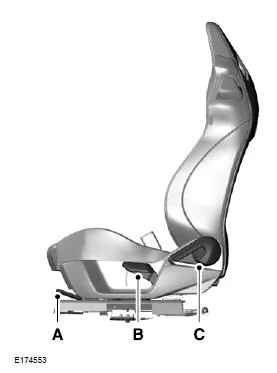
A A bar for adjusting the seat forward or backward.
B A lever for adjusting the seat height.
C A lever for adjusting the seatback recline.
Power Seat Adjustment
WARNINGS
Do not adjust the driver's seat or seatback while the vehicle is in motion. Adjusting the seatback while driving may cause you to lose control of the vehicle.
WARNINGS
If the seatback is reclined rearward, the occupant may slide under the seat belt and suffer serious injury in a collision.
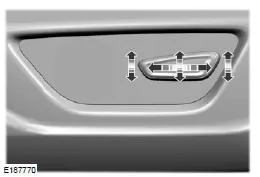
The power seat adjustment switch is located on the outside of the seat. Move the switch in the direction of the arrow to raise or lower the seat cushion, or to move the seat forward, backward, up or down.
Power Adjustable Lumbar Support
The power lumbar support switch is located on the outside of the driver's seat.
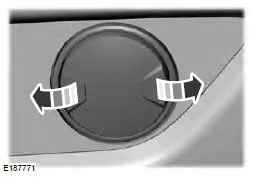
Press one side of the switch to increase the firmness of the lower backrest. Press the other side of the switch to decrease the firmness of the lower backrest.
Rear seats
WARNINGS
When folding down the seat, take care not to pinch your fingers in the mechanism.
Make sure the seats and seatbacks are fully locked in their latches.
Access to the Rear Seats
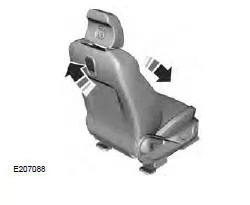
Operate the seatback release to fold the front seatback forward and gain access to the rear seat. The release handle is located at the top of the rear of the front seat. The seatback is equipped with a memory function and automatically locks back into its original position.
Individually Folding Rear Seats
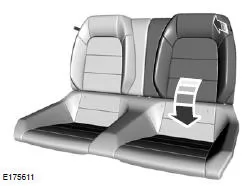
Folding the Seatback(s):
- Pull the strap to release the seatback.
- Fold the seatbacks down.
Returning the Seatbacks to the Upright Position
When raising the seatback(s), push the top of the seatback rearward and make sure the seat latch audibly engages. Pull the seatback forward to make sure it is locked.
Heated and Ventilated Seats
Heated Seats
WARNING
Persons whose skin is insensitive to heat due to age, chronic illness, diabetes, spinal cord injury, medication, alcohol, fatigue or other physical causes must use the seat heater with caution. The seat heater can cause burns even at low temperatures, especially when used for a long period of time. Do not place heat-insulating objects such as blankets or cushions on the seat, as the seat heater may overheat.
Note: Never:
- Place heavy objects on the seat.
- If water or other liquid has been spilled on the seat, switch on the seat heater. Allow the seat to dry thoroughly.
- Operate the seat heater when the engine is not running. This may drain the battery.
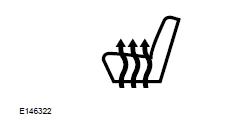
Touch the seat heater symbol to cycle through the different heating settings and the heater off setting.
Additional indicator lights show warmer settings.
Seat Cooling
Seat cooling works only when the engine is running.
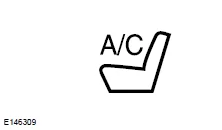
Touch the seat cooling symbol to cycle through the different cooling settings and the cooling off setting. Additional indicator lights show cooler settings.
If the engine speed drops below 350 rpm while the cooled seats are switched on, the function switches off automatically.
You may need to switch it back on.
The seats in the Ford Mustang (VI Gen, 2014–2023) offer a high level of comfort and safety. Whether manual or power-adjustable, the Ford Mustang 2014–2023 allows optimal adjustment to the individual needs of the driver and passengers.
Notable features include the range of functions such as head restraint adjustment, lumbar support, and the option of heated and ventilated seats. The Ford Mustang VI Generation shows how sporty design and comfort can be combined perfectly.
This seat concept underlines the premium character of the Ford Mustang (VI Gen, 2014–2023) and ensures a relaxed driving experience, even on longer journeys.
Test yourself
A quick Ford Mustang quiz: every answer comes with an explanation and a link to the manual page.