Supplemental Restraint System. Occupant Classification System. Side Airbags. Driver and Passenger Knee Airbag
The Ford Mustang 6th Generation is equipped with an intelligent occupant classification system which, together with front, side and knee airbags, provides the highest level of safety. This chapter explains how the system works, which seating positions are problematic and how to avoid false readings. It also explains in clear terms the special functions for children, empty seats and sensor deactivation. The section is supplemented by notes on side airbags and the driver and passenger knee airbags. This makes it clear that the Ford Mustang protects not only with performance but also with innovative safety technology.
Occupant Classification System
WARNINGS
Even with advanced restraint systems, children up to 12 years old should always be properly secured in a rear-seat position. Failure to heed this warning may result in serious or fatal injury.
WARNINGS
NEVER install a rear-facing child restraint system on a seat protected by a front airbag.
Improper sitting posture, an incorrect seating position, or a backrest reclined too far rearward can reduce the weight applied to the seat cushion and impair the front occupant classification system, which may result in serious injury or death in a crash. Always sit upright with your back against the seatback and your feet on the floor.
To reduce the risk of serious injury: Do not store items in the seatback pocket and do not hang items from the seatback when a child is seated in the front passenger seat. Do not place objects under the front passenger seat or between the seat and the center console. Check the passenger airbag indicator light for the correct airbag status. Failure to follow these instructions may impair the front occupant classification system.
Any modification or adjustment to the front passenger seat may impair the performance of the front occupant classification system.
This system uses sensors built into the front passenger seat and seat belt to detect a properly seated passenger and determine whether the front passenger airbag should be enabled (i.e., allowed to inflate).
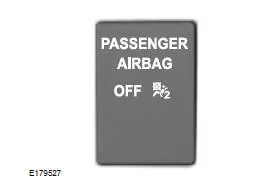
The front occupant classification system has an indicator that stays illuminated when the passenger airbag is deactivated.
The indicator light is located in the overhead console.
Note: When the ignition is switched on for the first time, the indicator light illuminates briefly to show that it is operational.
The front occupant classification system is designed to deactivate the front passenger airbag (so that it does not inflate) when a rear-facing child seat, a forward-facing child restraint system, or a child booster cushion is detected. Even with this technology, parents are strongly advised to always secure children properly in the rear seat. The sensor also deactivates the front passenger airbag and the seat-mounted side airbag when the front passenger seat is unoccupied.
- When the front occupant classification system deactivates the front passenger airbag (i.e., it will not inflate), the indicator light stays illuminated to remind you that the front passenger airbag is deactivated.
- If a child restraint system has been installed and the indicator light does not illuminate, switch off the vehicle, remove the child restraint system from the vehicle, and reinstall the restraint system according to the child restraint manufacturer's instructions.
The front occupant classification system is designed to activate the front passenger airbag (so that it inflates) when the system detects that an adult-sized person is properly seated in the front passenger seat.
- When the front occupant classification system activates the front passenger airbag (so that it can inflate), the indicator light goes off and stays off.
If an adult-sized person is seated in the front passenger seat but the passenger airbag indicator light is illuminated, the person may not be seated properly. If this occurs, proceed as follows:
- Switch off the vehicle and ask the person to return the seatback to a fully upright position.
- Have the person sit upright in the center of the seat cushion with their legs comfortably extended.
- Restart the vehicle and have the person maintain this position for approx. two minutes. This allows the system to detect the person, and it will activate the front passenger airbag.
- If the indicator light still remains illuminated, ask the person to sit in the rear seat.
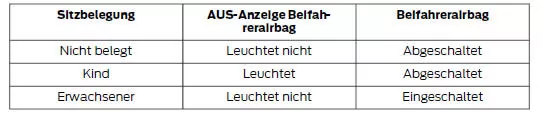
Note: When the front passenger airbag OFF indicator light is illuminated, the passenger side airbag (mounted in the seat) may be deactivated to reduce the risk of injury from airbag deployment.
After all vehicle occupants have adjusted their seats and fastened their seat belts, they must continue to sit properly at all times. A properly seated passenger sits upright, leans against the seatback, sits centered on the seat cushion, and keeps their legs comfortably extended toward the floor. An improper seating position can increase the risk of injury in a crash.
If a passenger sits slouched, lies down, twists sideways, sits on the front edge of the seat cushion, leans forward or sideways, or places one or both legs on the seat cushion, the risk of injury in a crash increases significantly.
If you believe the passenger airbag deactivation indicator light is giving incorrect information, check the following:
- Objects under the seat.
- Objects between the seat cushion and the center console.
- Objects hanging from the seatback.
- Objects stored in the seatback pocket.
- Objects the passenger is holding on their lap.
- Obstruction of the seat by cargo.
- Other passengers pulling on or pressing against the seat.
- The feet and knees of a rear-seat passenger may rest on the seat or press against it.
The conditions listed above can cause the front occupant detection system to misinterpret the weight of a properly seated front passenger. The person in the front passenger seat may appear heavier or lighter due to the conditions described in the list above.

Make sure the front occupant detection system is working properly. See Crash Sensors and Airbag Indicator.
If the airbag warning lamp illuminates, proceed as follows:
The driver and adult front passenger should check whether there are objects under the front passenger seat or whether cargo is obstructing the seat.
If there are objects there or cargo is obstructing the seat, take the following steps to remove the obstructions:
- Pull over to the side of the road.
- Switch off the vehicle.
- The driver and adult front passenger should check whether there are objects under the front passenger seat or whether cargo is obstructing the seat.
- Remove the obstructions (if any are found).
- Restart the vehicle.
- Wait at least two minutes and make sure the airbag warning lamp is no longer illuminated.
- If the airbag warning lamp remains illuminated, this may indicate a fault in the front occupant detection system.
Never attempt to repair or service the system yourself. Take your vehicle to an authorized dealer immediately.
Side Airbags
WARNING
Only use seat covers designed for seats with side airbags. Have these installed only by an authorized dealer.
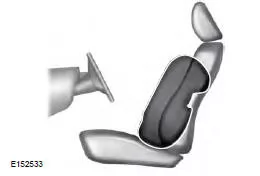
Coupe
Convertible
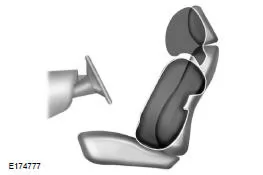
The airbags are located in the backrests of the front seats. A label on the seat backrest indicates this.
Knee Airbag – Driver and Passenger
WARNINGS
Keep the glove box door closed while driving to ensure optimal performance of the passenger knee airbag in a crash.
To reduce the risk of injury, do not obstruct the deployment path of the knee airbag and do not place objects there.
A driver knee airbag is located below or inside the instrument panel. A passenger knee airbag is located in the glove box door. In a crash, the Restraint System Module may deploy the driver and passenger knee airbags depending on the severity of the crash and occupant conditions.
Under certain crash and occupant conditions, the driver and passenger knee airbags may deploy without the driver front airbag deploying. As with front and side airbags, it is important to sit properly and wear your seat belt to reduce the risk of death or serious injury.
 Make sure the knee airbags are working properly. See Crash Sensors and Airbag Indicator.
The passenger detection system and the side and knee airbags of the Ford Mustang (VI Gen, 2014–2023) are integral parts of the comprehensive safety concept. These systems adapt protection to the respective conditions and make a decisive contribution to the safety of driver and passengers.
The Ford Mustang 2014–2023 stands out with highly developed sensor technology and precisely calibrated protection mechanisms. This keeps the Ford Mustang VI Generation a reliable partner even in critical situations.
This safety concept shows how the Ford Mustang (VI Gen, 2014–2023) combines sporty performance with the highest level of responsibility.
Test yourself
A quick Ford Mustang quiz: every answer comes with an explanation and a link to the manual page.