Brakes
This section covers the braking system of the Ford Mustang (VI Gen), from brake assist and ABS to the parking brake. The chapter provides warnings about wear detection, tips for use in wet conditions, and information on how to respond to pedal problems. The hill start assist system is also described. The detailed explanations show how important regular maintenance and correct operation are for safe driving in all conditions.
General Information
Note: Occasional brake noise is normal. If a metal-on-metal grinding sound or constant squealing or scraping occurs, the brake pads may be worn. Have the system inspected by an authorized dealer immediately. If the steering wheel constantly vibrates or shudders when braking, have the vehicle checked by an authorized dealer.
Note: Even under normal driving conditions, brake dust can accumulate on the wheels. Some dust is unavoidable because the brakes wear. However, it does not cause brake noise. See Cleaning Alloy Wheels.
 See Warning Lights and Indicators.
Wet brakes reduce braking performance. After leaving a car wash or driving through standing water, lightly press the brake pedal several times to dry the brakes.
Brakes During Acceleration
If the accelerator pedal sticks or jams, firmly and steadily apply the brake pedal to slow the vehicle and reduce engine power. In such a case, keep braking and bring the vehicle to a safe stop. Shift the transmission to Park (P), switch off the engine and apply the parking brake. Check the accelerator pedal for obstruction. If nothing is found and the problem persists, the vehicle must be towed to the nearest authorized dealer.
Brakes During Acceleration
Brake Assist detects hard braking based on your pedal pressure. It provides maximum braking effectiveness for as long as you press the pedal, which can shorten stopping distances in critical situations.
Anti-lock Braking System
This system helps you maintain steering control during emergency braking by preventing the wheels from locking.
 This warning lamp lights up briefly when the ignition is switched on. If the lamp does not light up when starting, stays on or flashes, the system may not be active. The system should be checked immediately by an authorized dealer. If the anti-lock braking system is deactivated, you can still brake normally.
 If the brake warning lamp still lights up after the parking brake has been released, the system must be checked by an authorized dealer.
Notes on Driving with ABS
Note: When the system activates, the brake pedal may pulsate slightly and may feel lower. Keep the brake pedal pressed.
You may also hear a noise from the system. This is normal.
The anti-lock braking system cannot eliminate risks when:
- You follow the vehicle ahead too closely.
- The vehicle loses contact with the road due to aquaplaning.
- You take corners too fast.
- The road surface is poor.
Parking Brake
WARNINGS
If the brake system warning lamp remains lit when the parking brake is fully released, the brakes may not function properly. Contact your authorized dealer as soon as possible.
Whenever you leave the vehicle, always fully apply the parking brake and make sure the automatic transmission is in Park (P) or the manual transmission is in first gear (1) or reverse (R).
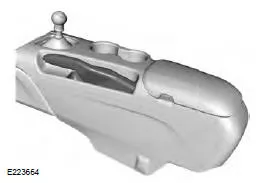
To apply the parking brake, pull the parking brake lever up as far as it will go.
Releasing the parking brake:
- Press the button at the end of the parking brake lever.
- Pull the lever up slightly, then push it down.
Hill Start Assist
WARNINGS
The system does not replace the parking brake. When leaving the vehicle, always apply the parking brake and shift the automatic transmission to Park (P) or the manual transmission into first gear.
Shift the manual transmission into first gear.
Remain in the vehicle after the system has been activated.
The driver is responsible at all times for controlling the vehicle and monitoring the system. Intervene as necessary.
If the engine overspeeds or a fault is detected, the system switches off.
The system makes it easier to start on inclines without having to use the parking brake.
When the system is active, brake pressure is maintained for two to three seconds after the brake pedal is released.
This gives you time to move your foot from the brake pedal to the accelerator pedal. The brakes are released automatically once the engine has built up enough torque to prevent the vehicle from rolling back. This is helpful when starting on an incline, for example on a multi-storey car park ramp, at a traffic light, or when reversing uphill into a parking space.
The system activates automatically on inclines where the vehicle would roll back significantly. On vehicles with a manual transmission, you can switch this function off using the information display. See Information Displays. The system stays on or off according to the last setting.
Note: There is no indicator lamp showing whether the system is on or off.
Using Hill Start Assist
- Press the brake pedal to bring the vehicle to a complete stop. Keep the brake pedal pressed and select a gear for the incline (e.g. first gear (1) for uphill or reverse (R) for downhill).
- The system activates automatically when the sensors detect that the vehicle is on an incline.
- When you take your foot off the brake pedal, the vehicle is held on the incline for approximately two to three seconds without rolling back. This holding time is automatically extended during the start-off phase.
- Drive off normally. The brakes are released automatically.
Switching the System On and Off
Vehicles with Manual Transmission
You can switch this function on or off using the information display.
When you start your vehicle, the system recalls the last setting.
Vehicles with Automatic Transmission
The system cannot be switched on or off. When the ignition is switched on, the system switches on automatically.
The braking systems of the Ford Mustang (VI Gen, 2014–2023) provide maximum safety and precise response. With anti-lock braking system, Brake Assist and Hill Start Assist, the Ford Mustang 2014–2023 is well equipped for dynamic driving situations and everyday use.
Special notes on handling and maintenance help ensure that braking performance always remains optimal. The Ford Mustang VI Generation shows its strengths here with well-engineered technology and modern safety equipment.
Frequently Asked Questions
What to do if the brake warning lamp in the Ford Mustang (VI Gen, 2014–2023) stays on even though the parking brake is released?
Have the brake system checked immediately by an authorized dealer.
How does Hill Start Assist work?
The system holds brake pressure for 2–3 seconds to prevent rolling back on inclines, and releases the brake automatically when you move off.
Test yourself
A quick Ford Mustang quiz: every answer comes with an explanation and a link to the manual page.