Technical data
The technical data for the Ford Mustang VI generation is documented here in detail. It covers all relevant information, from vehicle dimensions and vehicle identification numbers to specific engine oil and coolant specifications. The division by engine variant (e.g. EcoBoost, 5.0L) is especially helpful for quick reference. The clear listing of fill capacities and lubricant recommendations helps maintain long-term vehicle performance. Anyone who wants maintenance performed to manufacturer specifications will find a well-founded, structured overview in this chapter.
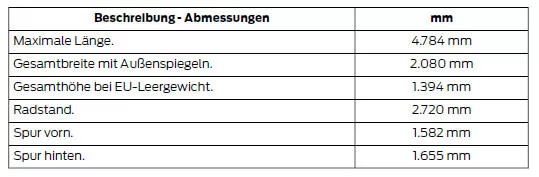
Vehicle Dimensions - Coupe
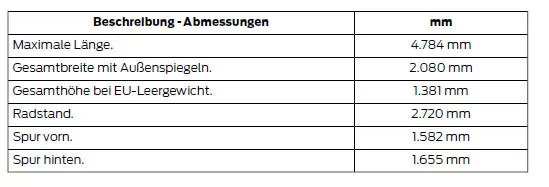
Vehicle Dimensions - Convertible
Vehicle Certification Label
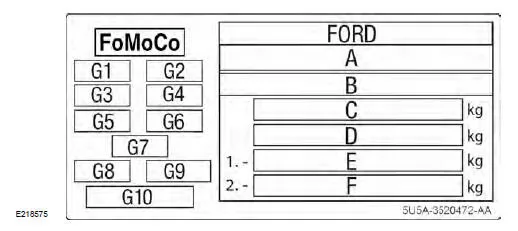
A Type Approval Number
B Vehicle Identification Number (VIN)
C Gross Vehicle Weight Rating (GVWR)
D Gross Combined Weight Rating (GCWR)
E Gross Axle Weight Rating (GAWR) Front
F Gross Axle Weight Rating (GAWR) Rear
G1 Driver Side
G2 Engine Code
G3 Transmission Code
G4 Axle Code
G5 Exterior Trim
G6 Exterior Color
G7 Emissions
G8 Build Specification
G9 Build Specification
G10 Type Approval
The certification label is located on the passenger side door opening.
Note: The certification label may differ from the one shown here.
Note: The data on the certification label depends on market requirements.
Vehicle Identification Number - Left-Hand Drive
The vehicle identification number is located at the following positions.
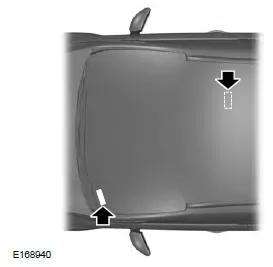
The VIN is stamped into the floor pan on the right side under the front seat. It is also located on the left side of the instrument panel and on the certification label – VIN.
Vehicle Identification Number - Right-Hand Drive
The vehicle identification number is located at the following positions.
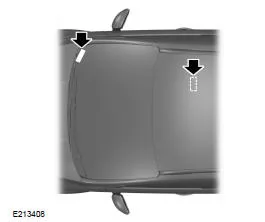
The VIN is stamped into the floor pan on the right side under the front seat. It is also located on the right side of the instrument panel and on the certification label - VIN.
Technical Data - 2.3L EcoBoost™
WARNING
The A/C refrigerant system contains refrigerant under high pressure. The A/C refrigerant system must only be serviced by qualified personnel. Opening the A/C refrigerant system may cause injury.
Fluid capacities
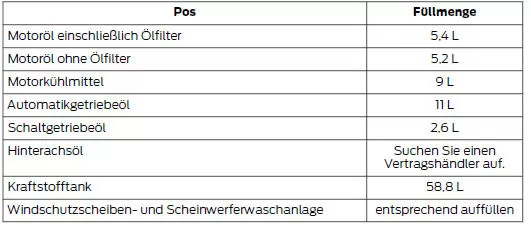
Adding Engine Oil

Engine oil refill quantity required to raise the level indicated on the dipstick from MIN to MAX.
Specification
Materials
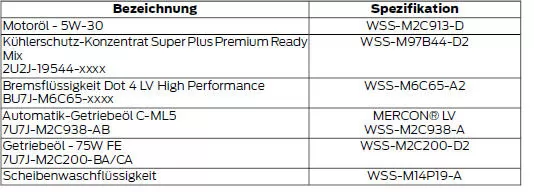
Only use fluid that meets Ford specifications.
If you cannot find engine oil with specification WSS-M2C913-D, you may use an SAE 5W-30 engine oil that is defined by ACEA A5/B5.
Note: Do not add more than 1 L between scheduled maintenance intervals.
Note: For a complete refill of Ford limited-slip differential axles, see an authorized Ford dealer.
Ford rear axles contain synthetic lubricant that does not need to be changed unless the axle is submerged in water.
Using oils and fluids that do not meet the specified specifications and viscosities may result in:
- Damage to components that may not be covered by the vehicle warranty
- longer engine starting times
- increased emission levels
- reduced engine power
- increased fuel consumption.
- Reduced braking performance.

We recommend engine oils and lubricants from Castrol and Ford.
Technical Data - 5.0L
WARNING
The A/C refrigerant system contains refrigerant under high pressure. The A/C refrigerant system must only be serviced by qualified personnel. Opening the A/C refrigerant system may cause injury.
Fluid capacities

Adding Engine Oil

Engine oil refill quantity required to raise the level indicated on the dipstick from MIN to MAX.
Specification
Materials
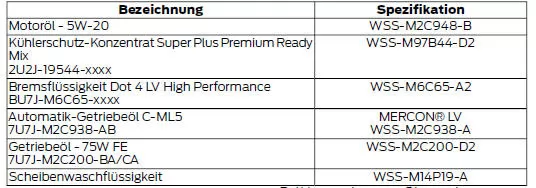
Only use fluid that meets Ford specifications.
If you cannot find engine oil that meets the specifications defined by WSS-M2C948-B, you may use an SAE 5W-20 engine oil that is defined by ACEA A5/B5.
Note: Do not add more than 1 L between scheduled maintenance intervals.
Note: For a complete refill of Ford limited-slip differential axles, see an authorized Ford dealer.
Ford rear axles contain synthetic lubricant that does not need to be changed unless the axle is submerged in water.
Using oils and fluids that do not meet the specified specifications and viscosities may result in:
- Damage to components that may not be covered by the vehicle warranty
- longer engine starting times
- increased emission levels
- reduced engine power
- increased fuel consumption.
- Reduced braking performance.

We recommend engine oils and lubricants from Castrol and Ford.
Fuel Consumption Values
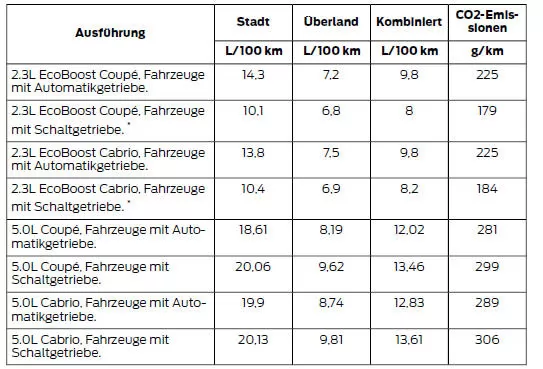
*For the values listed above, second gear was used when pulling away from a standstill on level ground. For vehicles with a manual transmission, we recommend using second gear when pulling away from a standstill on level ground.
The vehicle storage notes for the Ford Mustang (VI Generation, 2014–2023) help the driver optimally protect the vehicle during extended periods of non-use. The Ford Mustang 2014–2023 provides clear recommendations for battery care, tire pressure and vehicle covering to prevent damage and loss of value.
Proper preparation of the fuel system and checking of fluid levels before returning the vehicle to service are especially important. The Ford Mustang VI Generation demonstrates its high standard of technical care and longevity here.
Frequently Asked Questions
Why should the battery be disconnected during long-term storage?
To prevent discharge and to protect electronic systems from damage.
May the vehicle be raised on jack stands during storage?
Yes, this prevents flat spots on the tires and ensures even load relief on the suspension.
Test yourself
A quick Ford Mustang quiz: every answer comes with an explanation and a link to the manual page.