Restraint System. Side Airbags - Coupe. Crash Sensors and Airbag Indicator
The side and head airbags of the Ford Mustang (VI Gen, 2014–2023) supplement the protection systems in side impacts and rollovers. This chapter explains activation by dedicated crash sensors, which also control the pedestrian protection systems. The illustration of the sensors and warning signals in the cockpit shows how precisely the system works. Particular attention is paid to avoiding malfunctions caused by unauthorized modifications to the front area. For a modern safety experience that thinks ahead and protects.
Side Airbags - Coupe
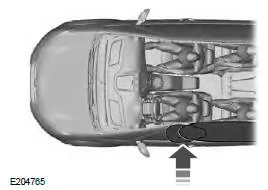
The head airbags are located above the front and rear side windows.
The airbags deploy in severe side impacts or in situations where the rollover sensor detects a certain probability of a rollover. The head airbags may deploy in more severe diagonal frontal collisions.
Crash Sensors and Airbag Indicator
WARNING
Modifying or adding accessories to the front of the vehicle (including the hood, frame, front bumper system, front body structure, tow hooks, and hood latch pins) can impair the performance of the airbag system and the deployable hood system and increase the risk of injury. Do not modify the front of the vehicle.
The vehicle is equipped with a number of impact, seat load, and pedestrian sensors that send information to the Restraint System Module.
The Restraint System Module deploys the front seat belt pretensioners, the driver airbag, the passenger airbag, the knee airbag(s), the seat-mounted side airbags, the head airbags, and the deployable hood system (for pedestrian protection). Depending on the type of impact (frontal impact, side impact, rollover, or pedestrian collision), the Restraint System Module deploys the appropriate safety devices.
The Restraint Control Module also monitors the readiness of the above safety devices as well as the front impact, seat occupancy and pedestrian sensors. The readiness of the restraint system is indicated by a warning lamp in the instrument cluster or, if the warning lamp fails, by an audible warning tone. Routine warning of the airbags and the deployable hood system is not required.
Problems with the system are indicated by the following:
 The readiness lamp does not light up immediately after the ignition is switched on.
- The readiness lamp flashes or stays on.
- An audible signal of five consecutive tones is sounded. The signal pattern repeats at regular intervals until the lamp is repaired and/or the fault is corrected.
If any of these symptoms occur (even temporarily), have the restraint system and the deployable hood system serviced by an authorized dealer immediately. Without proper servicing, the system may not function correctly in a crash.
Front Seat Belt Pretensioners and Airbags – The front restraint system is activated when a frontal deceleration of the vehicle is detected that is strong enough for the restraint system to deploy a safety device.
It does not indicate a fault in the system if, in a crash, the seat belt pretensioners and airbags for the driver and front passenger do not deploy, or, in a collision with a pedestrian, the deployable hood system remains inactive. The Restraint Control Module has evaluated the crash conditions (severity of impact, seat belt use) and determined that deploying these safety devices would not be appropriate.
- The front airbags are designed to deploy only in a frontal or near-frontal collision (not in a rollover, side impact or rear impact, unless the impact causes sufficient frontal deceleration of the vehicle).
- The seat belt pretensioners are designed to activate in a frontal, near-frontal or side collision.
- The knee airbag or knee airbags may deploy depending on the severity of the impact and seat occupancy.
- The side airbags are designed to inflate in certain side collisions. The head airbags inflate in certain side collisions and in situations where the roll sensor detects a certain probability of a rollover. The side airbags and head airbags may deploy in other types of collisions if sufficient lateral movement or deformation of the vehicle or a probability of rollover is detected.
- The deployable hood system is activated in a collision with a pedestrian at speeds of approx. 20 km/h to 50 km/h. Events similar to a pedestrian collision may also activate the hood system. See Pedestrian Protection.
The restraint system of the Ford Mustang (VI Gen, 2014–2023) includes modern side and head airbags as well as a sophisticated crash sensor system. This technology ensures that the airbags and seat belt pretensioners work together optimally in a crash to maximize occupant protection.
The warning systems and sensors of the Ford Mustang 2014–2023 constantly monitor the operational readiness of the safety components. In this way, the Ford Mustang VI Generation sets standards in safety and precision.
Frequently Asked Questions
When do the head airbags deploy in the Ford Mustang (VI Gen, 2014–2023)?
They deploy in severe side impacts, when there is a risk of rollover, or in certain diagonal collisions, to optimally protect the head area.
What does a continuously lit airbag indicator lamp signal?
This indicates a fault in the system. The vehicle should be taken to a qualified repair shop immediately.
Test yourself
A quick Ford Mustang quiz: every answer comes with an explanation and a link to the manual page.