Child restraint systems
This section on child restraint systems for the Ford Mustang (6th generation, 2014–2023) places the highest priority on the safety of young passengers. It explains in detail everything from selecting suitable child seats and positioning them correctly to ISOFIX installation. It is supplemented by notes on national regulations, recommended product types and installation aids. Important warnings and illustrations complete the chapter and help ensure correct installation. An essential part for every Mustang owner with children on board, for maximum safety on every trip.
Installing Child Restraint Systems
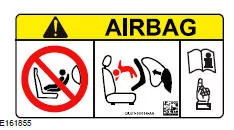
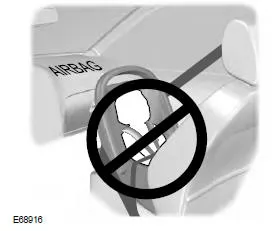
WARNINGS
NEVER use a rear-facing child restraint system on a seat with an active AIRBAG in front of it. There is a risk to the LIFE AND LIMB of the CHILD!
Use an approved child seat to restrain children under 150 cm (4 ft 11 in) tall on the rear seat.
Read and follow the manufacturer's instructions carefully when installing the child seat.
Never modify child restraint systems.
WARNINGS
Never carry children on a passenger's lap.
To avoid the risk of injury, never leave children or pets unattended in the vehicle.
After a collision, have child seats inspected by an authorized Ford dealer.
Only child seats that comply with ECE-R44.03 or later have been tested and approved for this vehicle. Your dealer offers a selection of child seats.
Note: Regulations for the use of child restraint systems vary from country to country.
Note: Whenever possible, children should always be properly secured in a rear seat position.
Child restraint systems for different weight classes
Select a suitable child restraint system based on the following criteria:
Child safety seat
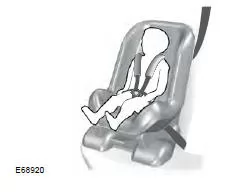
Children weighing between 13 kg and 18 kg must be secured in a child safety seat (Group 1) on the rear seat.
Child seats
WARNINGS
Do not secure a child seat or booster cushion with the lap portion of the seat belt only.
Do not secure child seats or booster cushions with loose or twisted seat belts.
Never place the seat belt under the child's arm or behind the child's back.
Never use cushions, books or towels to raise the child's seating position.
Make sure the child sits upright.
Make sure the child seat fits firmly against the vehicle seat. If necessary, move the seatback to an upright position. The head restraint may need to be raised or removed. See Head Restraints.
After removing the child seat, the head restraint must be reinstalled. See Head Restraints.
Secure children weighing over 15 kg but under 150 cm in a safety seat or on a booster cushion.
Note: When using a child seat on a rear seat, the corresponding front seat must be moved to a position that prevents contact with the rear passenger's feet or legs.
Child seat (Group 2)

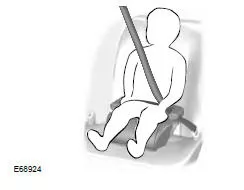
We recommend using a child seat with a seat cushion and backrest instead of using a booster cushion alone. The raised seating position allows the shoulder portion of the adult seat belt to lie across the middle of the child's shoulder, and the lap portion to sit firmly across the hips.
Booster cushion (Group 3)
ISOFIX anchorages
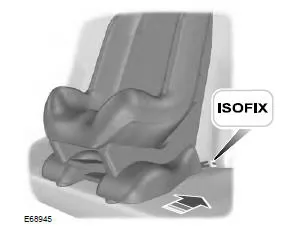
WARNING
When using the ISOFIX system, use an anti-rotation device. We recommend using a top tether or a support leg.
Your vehicle has ISOFIX anchorages designed for installing universal-approval ISOFIX child restraint systems.
The ISOFIX system consists of two rigid attachment arms on the child restraint system, which are secured to anchorage points on the outboard rear seats where the seat cushion and seatback meet.
Anchorage points for child seat top tethers are located behind the outboard rear seats.
Note: When purchasing an ISOFIX child restraint system, make sure it matches the correct weight group and ISOFIX size class for the intended seating position. See Child Restraint System Positioning.
Top tether anchorages

Top tether anchorages for child seats with a top tether are located on the back of the rear seatback.
Installing a Child Seat with a Top Tether
WARNING
Top tether straps must not be attached to any location other than the correct anchorage.
When installing a child seat with a top tether anchorage, follow the child seat manufacturer's instructions.
- 1. Route the top tether strap to the anchorage.
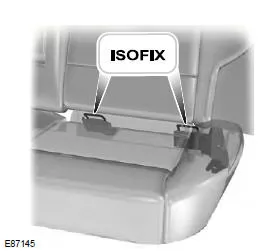
2. Press the child seat firmly rearward so that the lower ISOFIX anchorages engage.
3. Tighten the top tether strap.
Installing a Child Seat with a Support Leg
WARNINGS
Make sure the support leg is long enough to reach the vehicle floor.
Make sure the child seat manufacturer has approved your vehicle for this type of child seat.
When installing a child seat with a support leg, follow the manufacturer's instructions.
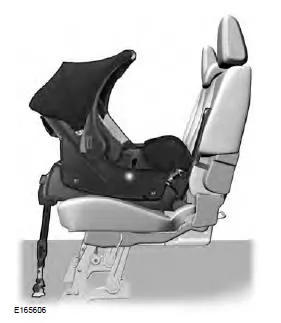
Child Restraint System Positioning
WARNINGS
NEVER use a rear-facing child restraint system on a seat with an ACTIVATED AIRBAG in front of it. If the airbag deploys, the CHILD may suffer SERIOUS OR FATAL INJURY.
When using child restraint systems with a support leg, make sure the support leg rests securely on the floor.
WARNINGS
When using child restraint systems secured with the vehicle's seat belt, make sure that the seat belt is neither loose nor twisted.
When using a child restraint system on a rear seat, the child restraint system must fit snugly against the vehicle seat. It must not touch the head restraint. If necessary, remove the head restraint.
See Head Restraints
Note: When using a child restraint system on a front seat, the front passenger seat must always be moved fully rearward. If the lap belt portion of the seat belt cannot be tightened without slack, return the seatback to an upright position and adjust the seat height. See Correct Seating Position.
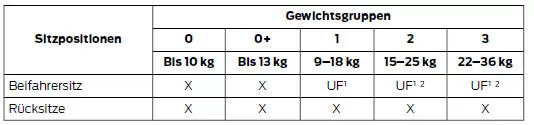
X Not suitable for children in this weight group.
UF¹ Suitable for universal forward-facing restraint systems approved for this weight group. However, it is recommended that children be placed in a child seat on a rear seat.
² At the time of printing, the Britax Römer Kidfix XP was the recommended child restraint for groups II/III.
The outer rear seats have ISOFIX lower anchorages. All outer rear seats have ISOFIX top tether anchorages. See Installing Child Restraint Systems.
The front passenger seat has no ISOFIX upper or lower anchorages. It is recommended that children be placed in a child seat on a rear seat.
ISOFIX Child Restraint Systems
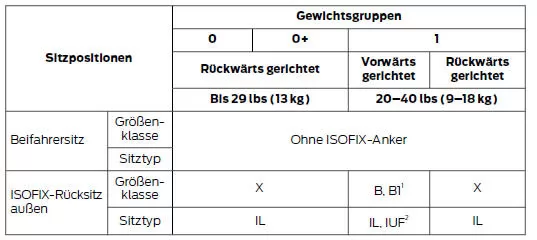
IL Suitable for certain semi-universal ISOFIX child restraint systems. Please observe the vehicle recommendations of the child restraint manufacturer.
IUF Suitable for universal forward-facing ISOFIX child restraint systems approved for this weight group and ISOFIX size class.
1. The ISOFIX size class for child restraints in the "universal" and "semi-universal" categories is defined by the capital letters A to G. These identification letters are located on the ISOFIX child restraint.
2. At the time of printing, the Britax Römer Duo was the recommended ISOFIX child restraint for group 1. Please consult a qualified technician for information on the current child restraint systems recommended by Ford.
Child restraint systems for the Ford Mustang (VI generation, 2014–2023) are designed for maximum safety. With ISOFIX anchorages, top tether anchor points and clear positioning instructions, the Ford Mustang 2014–2023 meets the needs of modern families and reliably protects the youngest passengers.
Correct installation of child seats and observance of the manufacturer's instructions are especially important. The Ford Mustang VI generation combines sporty performance with responsibility and offers equipment that ensures safety and comfort for children.
Frequently Asked Questions
May I use a rear-facing child restraint on the front passenger seat?
Only if the front passenger airbag is deactivated. Otherwise, there is a risk of fatal injury to the child.
Which child restraint systems are suitable for the Ford Mustang 2014–2023?
ISOFIX systems of the appropriate weight groups are recommended, as well as approved universal seats according to ECE-R44.03 or later.
Test yourself
A quick Ford Mustang quiz: every answer comes with an explanation and a link to the manual page.