Inspection of Exhaust System Components
(every 24,000 km [15,000 miles] or 12 months)
PROCEDURE
1. After the exhaust system has completely cooled (at least three hours after the engine is shut off), carefully inspect all of its components, from the inlet pipe flange at the exhaust manifold to the outlet pipe end. For unrestricted access under the vehicle, raise the vehicle using a hoist, or drive it onto a ramp or over an inspection pit.
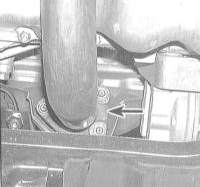
2. Inspect the system sections and their joints for signs of exhaust gas leaks, corrosion and mechanical damage. Make sure the fasteners are tight. Check the condition and secure attachment of the brackets and rubber hangers of the system components.
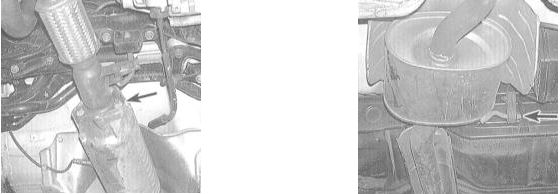
3. At the same time, inspect the underbody for holes, signs of corrosion, separated welds and other damage that could allow exhaust gases to enter the passenger compartment. Seal all detected openings with silicone or standard body filler.
4. Rattling and other extraneous noises while driving are often caused by loose exhaust system fasteners or displaced system sections. Carefully check the condition of the brackets and hangers, and pull on the pipes, muffler and catalytic converter to check whether they contact underbody or suspension components. If necessary, replace the mounting components.
5. The external condition of the outlet pipe end can be used to accurately assess the overall operating condition of the engine. The consistency and color of deposits covering the pipe end can reveal engine adjustment faults. If the pipe is covered with black soot deposits or a whitish coating, the engine requires adjustment together with the fuel system.
Test yourself
A quick Honda Accord quiz: every answer comes with an explanation and a link to the manual page.