Cooling System Component Inspection
(Every 12,000 km [7,500 miles] or every 6 months)
PROCEDURE
1. A wide range of engine failures is related to malfunction of the cooling system. On models equipped with AT, this system also cools the ATF, thereby maintaining the most favorable operating conditions for the transmission.
2. Inspection of the cooling system components must be performed after the powertrain has completely cooled down (at least three hours after the engine has been shut off).
3. Remove the radiator cap by first turning it counterclockwise to the first stop. If a hissing sound indicating excess pressure in the system is heard, wait until it stops, then press the cap down with your palm and continue turning counterclockwise until it is fully released. Thoroughly clean the cap inside and outside with clean water. Also clean the radiator filler neck. All signs of corrosion must be completely removed from the surfaces being cleaned. The coolant in the system should be relatively clear. If the coolant is rust-colored, the system must be flushed and refilled with fresh mixture (refer to the Cooling System Service (Draining, Flushing and Filling) section). If the coolant level does not reach the top, add a little more mixture of the required composition to the radiator (refer to the Fluid Level Check section).
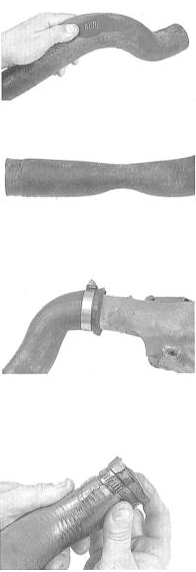
4. Carefully inspect the upper and lower radiator hoses, together with the smaller-diameter heater hoses located between the engine and the bulkhead of the engine compartment. Check the hoses along their entire length, and if cracks, bulges or signs of material aging are found, replace the defective components. Small cracks are usually easier to see when the hose is squeezed. Regardless of condition, hoses should be replaced approximately every two years.
5. Check that all hoses are securely attached to their connections/nipples. Coolant leaks usually appear as rust-colored or white deposits on the surfaces surrounding their source. If the hoses are secured to the connections/nipples with screw-type clamps, it is advisable to replace them with more reliable worm-drive or screw-type clamps.
6. Using compressed air or a soft brush, remove old leaves, insect remains and other debris from the gaps between the radiator core fins. Try not to damage the soft core fins or cut your fingers on their sharp edges.
7. Every second inspection, and at the first signs of cooling system malfunction, perform a pressure test of the radiator cap. If suitable equipment is not available, seek assistance at a service station.
Test yourself
A quick Honda Accord quiz: every answer comes with an explanation and a link to the manual page.