Cooling System Service (Draining, Flushing and Filling)
(every 48,000 km [30,000 miles] or 24 months)
Do not allow antifreeze to contact exposed skin or painted surfaces of the vehicle. Immediately wash off any splashes with plenty of water. Remember that antifreeze is a highly toxic liquid, and even small amounts swallowed can have the most serious consequences (including death). Never leave antifreeze stored in a loosely closed container, and immediately collect any coolant spilled on the floor. Remember that the sweet smell of antifreeze can attract children and animals. Consult local authorities on methods of disposing of used coolant. In many regions special collection points for various types of waste have been set up. Never drain old coolant into the sewer or onto the ground!
Non-toxic types of antifreeze have recently been developed, but they also require care in handling.
At the intervals specified in the vehicle maintenance schedule, the cooling system must be drained, flushed and refilled with a fresh mixture of antifreeze and water. This service prevents corrosion from developing inside the cooling passages and significantly improves system efficiency.
During service, the condition of all system hoses and the radiator filler cap must also be checked (see Cooling System Component Inspection Section). Defective components must be replaced.
Observe the precautions that apply when servicing the cooling system (see warning at the beginning of this Section).
Draining
PROCEDURE
1. Apply the parking brake and chock the wheels. Do not begin service procedures until the engine has completely cooled, i.e. at least several hours after the last drive.
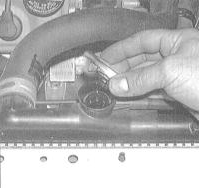
2. After the engine has completely cooled, remove the caps from the radiator neck and the coolant reservoir.
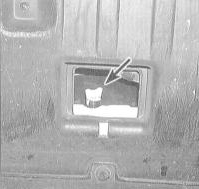
3. To drain the coolant from the radiator, remove the drain plug at its lower part. If the plug is seized, or is not provided, disconnect the lower hose from the radiator and drain the coolant through it.
Drain the coolant into a drain container of suitable capacity, which must be prepared in advance. Try to prevent antifreeze from getting into the eyes and onto exposed skin.
4. Once coolant has finished draining from the radiator, remove the lower radiator hose and drain the remaining coolant from the upper part of the engine block.
5. While coolant drains from the block, disconnect the hose from the coolant reservoir and remove the reservoir (see Heating and Cooling System Section). Flush the reservoir with clean water (with soap if necessary). Clean the level marks on the reservoir walls.
6. Inspect the condition of the radiator hoses and heater hoses, as well as their clamps at the fittings and connections (if necessary, see Cooling System Component Inspection Section).
7. Replace damaged components (if necessary, see Heating and Cooling System Section).
Flushing
PROCEDURE
1. Once the system has been drained, remove the thermostat from the engine, take it out of its housing, and reinstall the housing in its normal position (empty). The system is now ready for flushing.
2. Reinstall the lower radiator hose and tighten the radiator drain plug. Set the cabin heater control to maximum heat so that the heater core is also flushed.
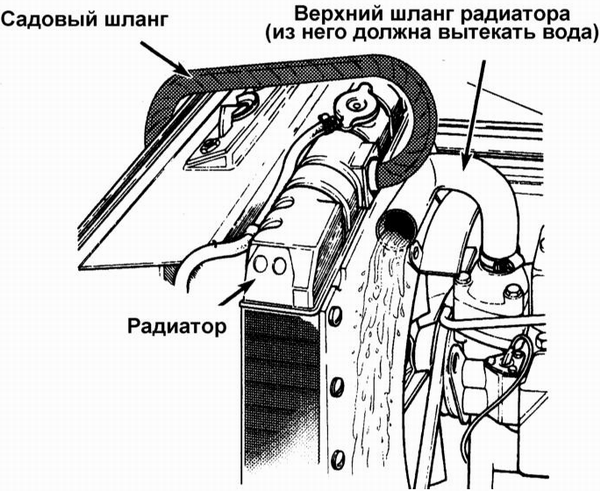
3. Disconnect the upper hose from the radiator and insert a garden hose into the radiator neck. Turn on the water supply and continue flushing until clean, clear water flows out of the upper hose.
4. In cases of heavy contamination or radiator blockage, remove the radiator (refer to Cooling, Heating and Ventilation System) and take it to an automotive service workshop for repair and servicing.
5. Corrosion products and dense deposits are removed from the cooling system passages by chemical treatment. Follow the manufacturer's instructions for the cleaning agent you have purchased.
If the cooling system is flushed and the coolant is replaced regularly, chemical treatment of the passages should not be necessary.
Filling
PROCEDURE
1. Install the thermostat and the expansion tank, and connect all hoses to the radiator.
2. Set the passenger compartment heater control lever to maximum heat.
3. Slowly fill the radiator with fresh coolant, mixed in the required proportion (refer to Specifications), until the level reaches the bottom edge of the filler neck. Add coolant to the expansion tank until the level reaches the FULL COLD mark. Wait five minutes and check the coolant level in the radiator again. Adjust if necessary.
4. Without installing the radiator cap, start the engine and warm it up until the thermostat valve opens (coolant should begin circulating through the radiator, warming the upper radiator hose).
5. Stop the engine and allow it to cool. Add a little more coolant to the radiator until the level reaches the bottom edge of the filler neck.
6. Squeeze the upper radiator hose to bleed air from the system. If necessary, add a little more coolant. Install the radiator cap.
7. Set the air temperature control and the fan speed control to maximum output.
8. Start the engine, warm it up to normal operating temperature, and check the system for signs of leaks.
Test yourself
A quick Honda Accord quiz: every answer comes with an explanation and a link to the manual page.