Brake System Inspection - Disc Brake Assemblies
PROCEDURE
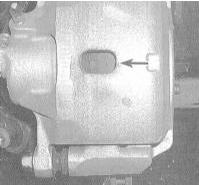
1. The caliper of each brake assembly is equipped with two pads (inner and outer). The ends of the pads are clearly visible through the special inspection window in the caliper body after the wheel is removed.
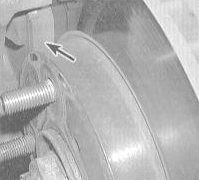
2. Evaluate the remaining thickness of the friction material on the inner pad visually through the caliper inspection window. The outer pad can be easily reached from the inside of the caliper. If the lining is worn beyond the permissible limit (see Specifications), replace the brake pads as a complete set. Note: Remember that the friction material is riveted or bonded to the metal backing plate, and the thickness of the backing plate must not be included in the measurement.
3. If it is difficult to assess the remaining pad thickness visually, or a more detailed inspection of the pads is required, remove the caliper(s) and take out the pads for closer examination (see Brake System chapter).
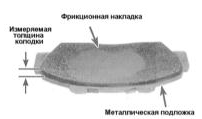
4. After the pads have been removed from the caliper, clean them with a suitable cleaning agent and check the remaining lining thickness using a ruler or a vernier caliper.
5. Measure the thickness of the brake discs with a micrometer. Compare the measurement results with the specified values (see Specifications). If the thickness of any disc is outside the permissible range, replace it (see Brake System chapter). If the disc thickness is within specification, check its overall condition. Look for defects such as deep scoring, grooves, galling, signs of overheating, etc. If necessary, remove the disc and have it machined (see Brake System chapter).
6. Before installing the wheels, inspect all brake lines for signs of damage, wear, deterioration of the material due to aging, leaks, kinks, twists, and other deformations (especially near the connection points of the flexible brake hoses to the brake calipers). Check that the hoses are securely retained by clips. Make sure that no brake hoses contact sharp edges of adjacent body, exhaust system, or suspension components (in all steering wheel positions). If necessary, carry out the appropriate repair or adjust the routing of the lines. Replace defective components (see Brake System chapter).
Test yourself
A quick Honda Accord quiz: every answer comes with an explanation and a link to the manual page.