Checking the Automatic Transmission Fluid. Checking the Brake Fluid. Checking the Clutch Fluid - Manual Transmission. Replacing the 12 V Battery
This section provides practical instructions for checking the brake, clutch and transmission fluids and for replacing the 12-volt battery. It includes important safety notes on avoiding chemical burns and electric shock. The battery management system is also covered, particularly for extended periods of inactivity. This keeps the Ford Mustang up to date technically, for reliable driving.
Checking the Automatic Transmission Fluid
If necessary, have the transmission fluid checked and changed by an authorized dealer at the correct service interval.
The automatic transmission does not have a dipstick for the transmission fluid.
Your maintenance schedule contains the intervals for checking and changing the fluid. The transmission does not consume fluid. However, contact an authorized dealer if the transmission slips or shifts slowly, or if you notice signs of leaking fluid.
Do not use transmission fluid additives, supplements or cleaning agents. Using such substances can impair transmission function and damage internal transmission components.
Checking the Brake Fluid
WARNINGS
Do not use any fluid other than the recommended brake fluid, as this will impair braking performance. Using an incorrect fluid could lead to loss of vehicle control, serious injury or death.
WARNINGS
Only use brake fluid from a sealed container.
Contamination by dirt, water, mineral oil products and other substances can damage and cause failure of the braking system. Failure to heed this warning could lead to loss of vehicle control, serious injury or death.
Do not allow the fluid to contact skin or eyes. If this happens anyway, rinse the affected areas immediately with plenty of water and seek medical attention.
A fluid level between the MAX and MIN marks is within the permissible operating range, and no fluid needs to be added. A fluid level outside the normal operating range can impair system performance. Have your vehicle inspected immediately.
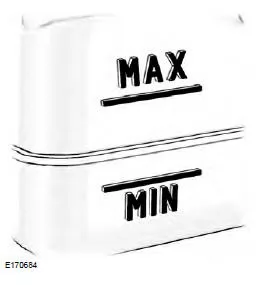
To prevent contamination of the fluid, keep the reservoir cap installed and fully closed except when adding fluid.
Use only fluid that meets Ford specifications. See Technical Specifications.
Checking the Clutch Fluid - Manual Transmission
The clutch and brake systems are supplied from the same fluid reservoir.
See Checking the Brake Fluid.
Checking the Washer Fluid
When topping up, use a mixture of washer fluid and water so that the fluid does not freeze in cold weather and cleaning performance is improved. For information on diluting the fluid, refer to the instructions on the product.
Fuel Filter
Your vehicle is equipped with a lifetime fuel filter integrated into the fuel tank. Regular maintenance or replacement is not required.
Replacing the 12 V Battery
WARNINGS
Batteries can produce explosive gases that can cause injury. Therefore, keep sparks, flames and open lights away from the battery.
When working near the battery, always cover your face and protect your eyes. Always ensure proper ventilation.
When lifting a battery with a plastic case, excessive pressure on the end walls can cause acid to escape through the vent valves. This can result in injury and damage to the vehicle or battery. Lift the battery out using a battery carrier or by hand at the opposite corners.
Keep batteries out of reach of children. Batteries contain sulfuric acid. Avoid contact with skin, eyes or clothing.
When working near the battery, protect your eyes from battery acid spray. If acid gets on your skin or in your eyes, flush the affected area immediately with water for at least 15 minutes and seek medical attention without delay. If acid is swallowed, seek medical attention immediately.
Battery terminals, clamps and related accessories contain lead and lead compounds. Wash your hands thoroughly after contact.
Vehicles with auto start-stop place different demands on the battery. The battery must be replaced only with one that has exactly the same specifications.
The battery is located in the engine compartment.
See Engine Compartment - Overview.
Your vehicle has a maintenance-free battery. No water needs to be added during service.
If the vehicle battery has a cover, make sure it is correctly reinstalled after cleaning or replacing the battery.
To ensure long-term, trouble-free operation, keep the top of the battery clean and secure the battery cables firmly to the battery terminals. If you see signs of corrosion on the battery or terminals, disconnect the cables from the terminals and clean them with a wire brush. Acid can be neutralized with a solution of baking soda and water.
We recommend disconnecting the negative battery cable from the battery if the vehicle will be out of service for an extended period.
To ensure proper operation of the Battery Management System (BMS), the ground connection of aftermarket electrical equipment must not be connected directly to the negative battery terminal. A connection to the negative terminal can affect the measurement of battery condition and lead to incorrect system operation.
Note: Electrical or electronic accessories or components added to the vehicle by you or a dealer after production can affect the performance and service life of the battery, and may also affect the performance of other electrical systems in the vehicle.
If the battery needs to be replaced, use only a model recommended by Ford that matches the electrical requirements of your vehicle.
If you disconnect or replace the battery and your vehicle has an automatic transmission, the transmission must relearn its adaptive strategy. For this reason, shifting may feel stiff during the first few drives.
This is normal until the transmission has fully updated its operation to the optimal shift feel.
The information on checking brake, clutch and automatic transmission fluid, and on the 12V battery, in the Ford Mustang (VI Gen, 2014–2023) places great emphasis on safety and durability. The Ford Mustang 2014–2023 supports the driver with clear instructions to keep all systems functioning properly.
Particular emphasis is placed on the correct handling of brake fluid and the battery, and on avoiding unsuitable additives that could cause damage. The Ford Mustang VI Generation combines sporty engineering with high operational reliability.
Frequently Asked Questions
Why should only brake fluid from a sealed container be used?
Because contamination can damage the brake system and significantly reduce braking performance.
What should be observed when replacing the 12V battery?
The battery must match the original specifications exactly, especially on vehicles with a start-stop system.
Test yourself
A quick Ford Mustang quiz: every answer comes with an explanation and a link to the manual page.