Tire pressure monitoring system
The Tire Pressure Monitoring System in the Ford Mustang warns you reliably when pressure drops, but it does not replace manual checks. This section explains how to check pressure and interpret the warning light. It also describes in detail how to reset the system after a tire change.
WARNING
The Tire Pressure Monitoring System does not replace a manual check of the tire pressures. Check the tire pressure regularly with a tire pressure gauge.
Failure to maintain the correct tire pressure can increase the risk of tire failure, loss of vehicle control, and injury.
 Check the tire pressure of all tires (including the spare tire, if equipped) every two weeks when the tires are cold.
Inflate the tires to the correct pressure.
See Wheels and Tires. The recommended tire pressures are also shown on the tire pressure label (on the driver's door or the B-pillar).
As a driver assistance feature, your vehicle is equipped with a Tire Pressure Monitoring System. A warning light indicates when the air pressure in one tire is significantly too low. When the tire pressure warning light comes on, stop the vehicle as soon as traffic conditions allow, check the tires, and inflate them to the correct pressure.
Driving with low tire pressure can have the following effects:
- Tire overheating.
- Tire failure.
- Increased fuel consumption.
- Reduced tire life.
- Impaired handling and braking.
The system is not a substitute for proper tire maintenance.
You must maintain the correct tire pressure even if the tire pressure warning light is not on.
To check the tire pressure using the information display, select the following:
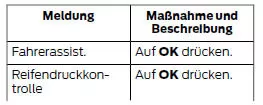
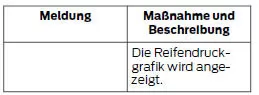
The Tire Pressure Monitoring System has a warning light that comes on when the system is not working properly. The malfunction indicator and the tire pressure warning light are combined. If the system detects a malfunction, the warning light flashes for about one minute and then stays on. This sequence repeats each time the ignition is switched on for as long as the malfunction persists. The system has detected a fault that requires service.
When the malfunction indicator light is on, the system may not be able to detect or indicate low tire pressure. A malfunction can have various causes. For example, installing a temporary spare tire or spare wheel can affect system operation. After every tire or wheel change, check that the Tire Pressure Monitoring System is working correctly.
Make sure the system works correctly after a tire or wheel change. See When the Temporary Spare Is Installed in this section.
Effect of Temperature on Tire Pressure
Under normal driving conditions, tire pressure can rise by up to 0.3 bar compared with cold tires.
If the vehicle is parked overnight and the temperature drops significantly below the daytime temperature, tire pressure can fall by up to 0.2 bar when the ambient temperature decreases by 31 °F (17 °C) or more. The system detects this pressure drop as significantly below the correct tire pressure, and the warning light comes on.
Tire Changes with a Tire Pressure Monitoring System
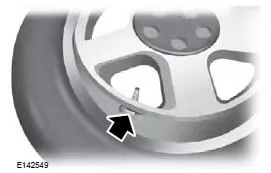
Tire care and service should be performed by an authorized dealer.
Note: All wheels and tires have a tire pressure sensor located in the wheel and tire cavity. The pressure sensor is mounted on the valve stem.
The pressure sensor is covered by the tire and is only visible after the tire has been removed. When installing new tires, take care not to damage the sensor.
How the Tire Pressure Monitoring System Works
The system measures the pressure in all four tires and transmits the tire pressure values to the vehicle.
The system detects this lower pressure as significantly below the correct tire pressure, and the warning light comes on.
Inflate the tires to the correct pressure.
When the Temporary Spare Is Installed
If a wheel and tire must be replaced with the temporary spare, the system will continue to indicate a fault. This is a reminder to repair the damaged wheel or tire and reinstall the wheel and tire assembly on the vehicle. To restore correct system operation, the repaired wheel and tire assembly must be installed on the vehicle.
When the System Does Not Appear to Work Correctly
The primary function of the system is to warn of low tire pressure. It can also warn when the system itself is no longer fully functional. The following table provides more information about the system:
Inflating the Tires
When inflating the tires, the system may not respond immediately to the added air.
System Warning Lights
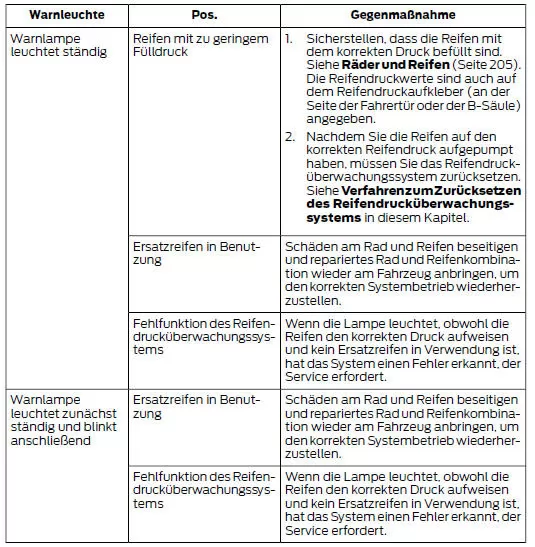
When the warning light is on:
- Check all tires to make sure none is flat.
- If one or more tires are flat, carry out the necessary repairs.
- Check the tire pressure and inflate all tires to the correct pressure.
- Carry out the procedure to reset the tire pressure monitoring system.
Procedure for resetting the tire pressure monitoring system
General
Due to different vehicle loads, the tire pressure for the front tires differs from that for the rear tires.
The system indicates by illuminating the warning lamp when the pressure differs between the two front tires or between the two rear tires.
To ensure even wear and longer life of the front and rear tires of the vehicle, it is recommended to rotate the tires between front and rear at regular intervals. In this case, the system must be adjusted so that it recognizes the tire rotation between front and rear axles. This information enables the system to correctly detect and warn of low tire pressure.
Carrying out the system reset procedure
- Switch the ignition on.
- Using the controls on the information display, navigate to the tire pressure reset function.
Scroll to the following option to reset the tire pressure monitoring system:
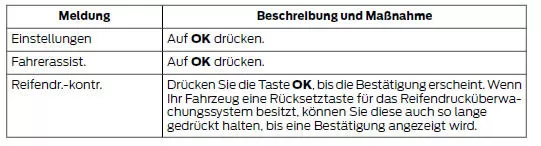
The tire pressure monitoring system of the Ford Mustang (VI Gen, 2014–2023) provides additional safety through early warning of pressure loss. The Ford Mustang 2014–2023 supports the driver with clear displays and reminders to check tire pressure regularly, to prevent breakdowns or damage.
The combination of electronic monitoring and manual checks is particularly important to ensure optimal tire condition at all times. The Ford Mustang VI generation combines sporty performance with modern safety technology.
Frequently Asked Questions
What does it mean if the tire pressure warning lamp flashes and then stays on continuously?
The system has detected a fault that requires service.
Does the tire pressure monitoring system need to be reset after a tire change?
Yes. To ensure correct function and monitoring, the system should be reset after the tires are changed.
Test yourself
A quick Ford Mustang quiz: every answer comes with an explanation and a link to the manual page.