Thermostatic Air Control Valve
GENERAL INFORMATION
The thermostatic air control valve supplies heated air to the engine. On a cold engine, the cold air passage is closed by a damper connected to a vacuum diaphragm.As the engine warms up, the vacuum passage to the diaphragm is gradually closed by the vacuum thermal bimetal valve, the damper partially opens, and cold air begins to flow into the engine.
Inspection
PROCEDURE
1. To check, disconnect the air duct from the filter on a cold engine. The damper must fully close the hot air passage.
2. After the engine starts, the damper must immediately close the cold air passage and then gradually open.
3. To check the vacuum thermostatic valve, disconnect and plug the vacuum hose. On a cold engine, strong vacuum must be felt. On a warm engine, there must be no vacuum.
4. To check the thermostatic regulator, remove it and disconnect the vacuum hose. When suction is applied through the fitting, the damper must close the cold air passage.
5. Replace a faulty vacuum valve or thermostatic regulator.
Vacuum Valve Replacement
PROCEDURE
1. Remove the air filter.
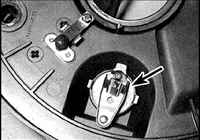
2. Bend back the clips and remove the vacuum valve (indicated by the arrow).
3. Remove and inspect the seal.
4. Fit the seal onto the valve and install the valve.
5. Secure the valve by bending the clips over.
6. Install the filter.
Thermostatic Regulator Damper Replacement
PROCEDURE
1. Remove the air filter and the adapter.
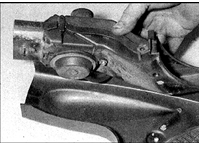
2. Unscrew the three screws and remove the thermostatic regulator. Disconnect the hose.
3. Unscrew the screws and remove the diaphragm.
4. Install the new diaphragm on the regulator damper and tighten the screws.
5. Connect the hose, install the regulator, and tighten the screws.
6. Install the filter.
Test yourself
A quick Nissan Sunny quiz: every answer comes with an explanation and a link to the manual page.