A/C Refrigerant Recovery/Evacuation/Charging
Procedure
WARNING
- Compressed air mixed with the HFO-1234yf (R-1234yf)forms a combustible vapor.
- The vapor can burn or explode causing serious injury.
- Never use compressed air to pressure test HFO-1234yf (R-1234yf)service equipment or vehicle air conditioning systems.
CAUTION
- Air conditioning refrigerant or lubricant vapor can irritate your eyes, nose, or throat.
- Be careful when connecting service equipment.
- Do not breathe refrigerant or vapor.
NOTE:
- If accidental system discharge occurs, ventilate the work area before resuming service.
- Additional health and safety information may be obtained from the refrigerant and lubricant manufacturers.
- Do not allow moisture to contaminate the A/C system oil. Moisture in the oil is difficult to remove, and it can damage the A/C compressor.
- Using an electronic vacuum gauge may decrease the required evacuation time because you can measure actual moisture level with this tool.
When an A/C System has been opened to the atmosphere, such as during installation or repair, it must be evacuated using an A/C recover/recycle/recharge machine. If the system has been open for several days, replace the receiver/dryer or the desiccant, drain the refrigerant oil, and add fresh oil. Then evacuate the system for several hours before charging it.
1. A/C Recover/Recycle/Recharge Machine - Connect

- Connect an A/C recover/recycle/recharge machine to the high-pressure service port (A) and the low-pressure service port (B), as shown, following the equipment manufacturer's instructions.
2. A/C Refrigerant - Recover
- Recover the refrigerant from the A/C system.
- Measure the amount of refrigerant oil removed from the A/C system after the recovery process is completed. Be sure to put the same amount of new refrigerant oil back into the A/C system before charging.
3. A/C System - Evacuate
- Evacuate the system. The vacuum pump should run for a minimum of 30 minutes or until the moisture vacuum test passes, to eliminate all moisture from the system. When the suction gauge reads -93.3 kPa (-700 mmHg, - 27.55 inHg) for at least 30 minutes, or the moisture vacuum test passes, close all valves, and turn off the vacuum pump.
- If the suction gauge dose not reach approximately -93.3 kPa (-700 mmHg, -27.55 inHg) in 15 minutes or the moisture vacuum test passes, there is probably a leak in the system. Partially charge the system, and check for leaks.
4. A/C Refrigerant - Leak Check
5. A/C Refrigerant - Charge
- Charge the system with the specified amount of R-1234yf refrigerant. Do not overcharge the system; the A/C compressor will be damaged.
Select the appropriate units of measure for your refrigerant A/C recover/recycle/recharge machine.
Refrigerant Capacity:
675 to 725 g
23.81 to 25.57 oz
0.675 to 0.725 kg
1.488 to 1.598 lbs
6. A/C Refrigerant - Leak Check
7. A/C System - Test
Special Tool Required
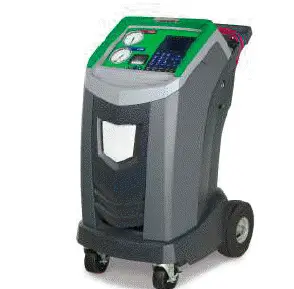
- R-1234yf A/C Recover/Recycle/Recharge Machine ROB421234
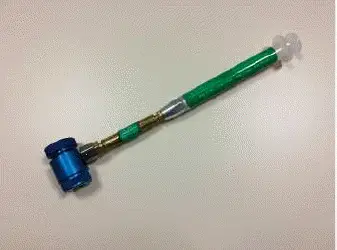
- R-1234yf POE Oil Injector ROB18470
*These tools are available through the Honda Tool and Equipment Program; call 888-424-6857.